
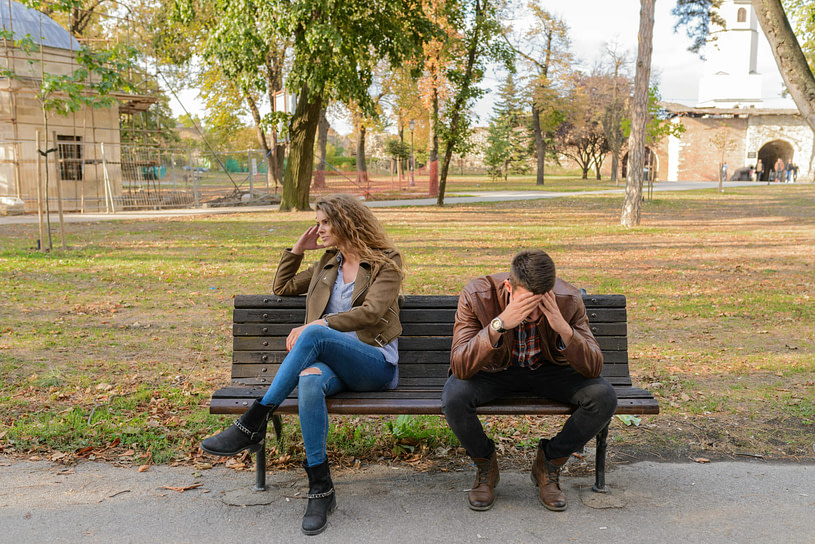
Have you ever found yourself ruining a good relationship without really knowing why? Perhaps you canceled plans at the last moment, picked unnecessary fights, or distanced yourself from someone who cared deeply about you. These behaviors are painful, confusing, and often leave us questioning our worth. The truth is, many of us unknowingly fall into the trap of self-sabotaging relationships.
So, what is self-sabotaging relationships? In simple terms, it is when you unconsciously engage in behaviors that damage or destroy your connection with someone you love, even though deep down, you want that relationship to thrive.
“We sabotage the great things in our lives because deep down we don’t feel worthy of them.”
– Iyanla Vanzant
Psychologists argue that self-sabotage in relationships is not just “bad behavior” but often rooted in deeper fears, past experiences, and unresolved wounds. According to Dr. Raquel Peel, a psychology researcher at the University of Southern Queensland, people often sabotage relationships due to fear of intimacy, unresolved childhood trauma, and low self-esteem. In fact, her 2019 study found that individuals prone to self-sabotage tend to repeat destructive patterns in romantic partnerships despite wanting lasting love.
This is why understanding the signs, causes, and psychology behind these patterns is so critical. Not only can awareness save your relationship, but it can also help you heal your own heart.
Let’s explore the 7 things experts want you to know about self-sabotaging relationships, backed by science, expert insights, and practical strategies for change.
1. Self-Sabotaging Relationships Are More Common Than You Think

When you ask yourself, “What is self-sabotaging relationships, and why does it happen to me?”, the first thing to realize is—you’re not alone. Research published in the Journal of Couple and Relationship Therapy shows that self-sabotage is surprisingly common in both dating and long-term relationships.
Dr. Raquel Peel, who has dedicated much of her work to this subject, explains that individuals often create obstacles when relationships become serious. This may include withdrawing emotionally, starting unnecessary arguments, or convincing themselves that their partner “isn’t right” even when the relationship is healthy.
The emotional truth? Many people fear happiness because it feels unfamiliar. If you grew up with instability, peace can feel threatening. This subconscious discomfort drives many into repeating harmful cycles.
2. Fear of Vulnerability Is the Hidden Driver
Self-sabotage often stems from fear of vulnerability. Dr. Brené Brown, a world-renowned researcher on vulnerability, emphasizes that intimacy requires openness, trust, and courage—the very qualities people fear when they feel unworthy of love.
“Vulnerability is the birthplace of love, belonging, joy, courage, empathy, and creativity.”
– Brene Brown
When you ask what is self-sabotaging relationships at its core, vulnerability lies at the center. People sabotage when they fear being truly seen. They pull back to protect themselves from possible rejection, but ironically, that very behavior ensures rejection happens.
A 2011 study in Personality and Social Psychology Review found that fear of intimacy is strongly correlated with avoidance, withdrawal, and distrust in romantic relationships. In other words, people don’t sabotage because they don’t want love—they sabotage because they’re terrified of losing it.
3. Childhood Attachment Patterns Shape Adult Relationships

The roots of self-sabotaging relationships often stretch back to childhood. Psychologist John Bowlby’s attachment theory and Mary Ainsworth’s “Strange Situation” studies revealed how early caregiving experiences shape our ability to trust, connect, and bond as adults.
If a child grows up in an environment where love felt conditional, inconsistent, or unsafe, they may internalize the belief that relationships are unreliable. As adults, these individuals may unconsciously recreate similar dynamics.
“The way we are treated as children is the way we learn to treat ourselves as adults.”
– John Bowlby
For example:
Someone with an anxious attachment style may sabotage by becoming clingy or overly jealous.
Someone with an avoidant attachment style may sabotage by distancing themselves whenever things get emotionally intense.
So, what is self-sabotaging relationships if not old wounds resurfacing in new ways? Experts stress that awareness of your attachment style is the first step toward breaking these cycles.
4. Negative Self-Talk and Low Self-Worth Fuel the Cycle
Low self-esteem is a major predictor of self-sabotaging relationships. When people don’t feel worthy of love, they unconsciously act in ways that confirm that belief.
Research from the Journal of Personality and Social Psychology shows that people with low self-esteem are more likely to misinterpret neutral actions as rejection and to doubt their partner’s love. For example, if a partner forgets to reply quickly to a text, a person with low self-worth may assume abandonment and lash out, creating unnecessary conflict.
“You yourself, as much as anybody in the entire universe, deserve your love and affection.”
– Buddha
The human side of this is heartbreaking: “If you don’t believe you deserve love, you’ll keep proving yourself right.”
This explains why asking what is self-sabotaging relationships often brings us back to the way we see ourselves. Until self-worth is rebuilt, even the healthiest relationships may crumble under the weight of self-doubt.
5. Small Acts of Sabotage Add Up Over Time

Self-sabotage rarely starts with dramatic gestures. Instead, it’s usually made up of micro-behaviors that chip away at trust and connection. According to relationship expert Dr. John Gottman, it’s often the “small things done often” that predict whether relationships survive or fail.
“It is not the mountain ahead that wears you down—it’s the pebble in your shoe.”
– Muhammad Ali
Examples of sabotage include:
Withdrawing affection when upset.
Testing your partner to “prove” their loyalty.
Picking fights over trivial issues.
Comparing your partner to others.
Keeping emotional walls up even when your partner tries to connect.
When people ask what is self-sabotaging relationships in practice, these small yet repeated acts are the answer. They create an emotional distance that eventually turns into a canyon.
6. Recognizing the Pattern Is the First Step Toward Healing
The good news is that self-sabotaging behaviors can be unlearned. Awareness is the turning point. Therapists emphasize practices such as:
Journaling destructive behaviors and triggers.
Seeking therapy, especially Cognitive Behavioral Therapy (CBT), to challenge negative beliefs.
Mindful communication—saying what you feel instead of acting out.
Pausing before reacting—giving yourself space to process emotions.
“Until you make the unconscious conscious, it will direct your life and you will call it fate.”
– Carl Jung
Research supports this: a 2018 study in Clinical Psychology Review found that mindfulness-based therapies significantly reduce avoidance and improve emotional regulation in relationships.
The emotional breakthrough comes when individuals realize: “Awareness feels like pain at first, but it’s actually freedom knocking.”
7. Healing Is Possible: Rebuilding Trust and Healthy Love

So, what is self-sabotaging relationships when viewed through the lens of healing? It is not a permanent condition, but rather a cycle that can be broken. Experts suggest:
Therapy and counseling to address deep-rooted fears.
Open communication with partners about triggers and needs.
Practicing self-love daily through affirmations, boundaries, and self-care.
Building emotional resilience so that intimacy feels safe instead of threatening.
“Love is not about possession. Love is about appreciation.”
– Osho
Dr. Stan Tatkin, author of Wired for Love, emphasizes that healing relationships is possible when both partners commit to creating a secure, consistent, and nurturing bond.
The emotional truth? Love doesn’t have to feel like walking on glass—you can learn to hold it gently.
Conclusion: From Sabotage to Healing

Self-sabotage in relationships may feel like a cruel trap, but it’s actually a signal—a sign that your heart is carrying wounds that need attention. When you ask what is self-sabotaging relationships, the real answer lies not in blame but in understanding. It’s about recognizing that fear, vulnerability, and past patterns can shape the way we love today—but they don’t have to define tomorrow.
“The wound is the place where the Light enters you.”
– Rumi
If you recognize yourself in these patterns, don’t see it as failure. See it as the first step toward rewriting your love story. Healing is possible, and love can be safe, fulfilling, and lasting.
Ready to dive deeper into emotional healing, relationship psychology, and proven strategies to rebuild trust? Explore expert-backed resources at MindsetBoosters and start your journey toward healthier, more fulfilling connections.